Play is how toddlers learn language. This SLP-approved 2025 guide helps caregivers choose toys and design play that boosts speech and vocabulary. It covers age-based milestones, evidence-based techniques like modeling and expansion, bilingual and AAC-friendly strategies, activity scripts you can use at home, and simple trackers to monitor progress so families know what to try and when to seek help.
Why play drives speech development
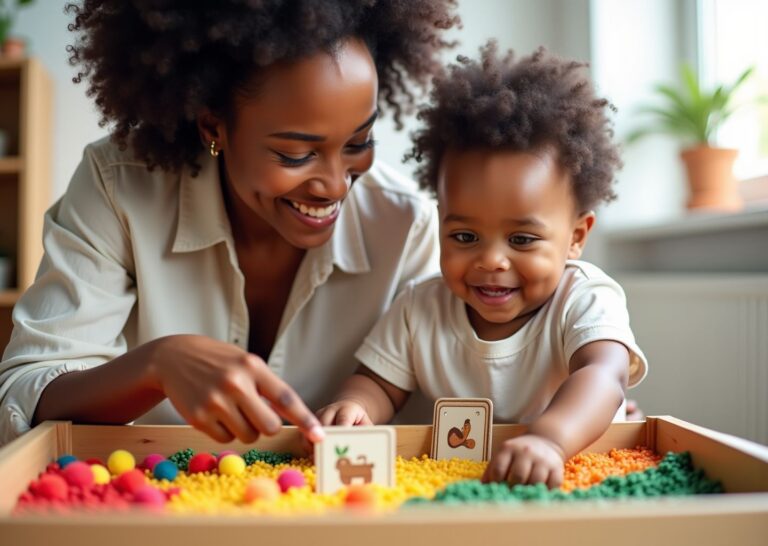
Play serves as the primary engine for language acquisition in the early years. When toddlers engage with toys, they are not just passing time or staying occupied; they are building the cognitive framework needed to understand symbols and social rules. This process is rooted in the way the human brain develops. Language is a social tool, and play is the natural environment where social skills are born. One of the most important elements of this development is joint attention. This happens when a child and an adult focus on the same object or event at the same time, creating a shared mental space. If a child looks at a toy car and the parent says the word “car,” the child makes a direct connection between the object and the sound. Without this shared focus, words are often just background noise. Research shows that children who spend more time in joint attention with their caregivers tend to have larger vocabularies later on.
Turn-taking is another vital skill that begins long before a child speaks their first sentence. It is the foundation of every conversation. When a toddler rolls a ball back to a parent or takes a turn placing a block on a tower, they are learning the rhythm of human interaction. They learn that communication involves waiting and responding. This back-and-forth flow is exactly how a dialogue works. Imitation follows a similar path. Children usually copy physical movements before they copy sounds. A child who can mimic a hand wave or a clap is developing the neural pathways required to mimic the word “hi.” Play provides endless opportunities to practice these motor and vocal imitations in a low-pressure setting.
As play becomes more complex, it moves into the realm of symbolic play. This is a massive milestone for speech development. It occurs when a child uses one object to represent another. A wooden block might become a telephone, or a plastic bowl might become a hat. This shift shows that the brain can handle abstract concepts. Words are symbols too; the word “apple” is not the actual fruit but a symbol that represents it. When a child masters symbolic play, they are proving they have the mental tools to use language effectively. This is why toys that encourage imagination are so highly valued by speech-language pathologists.
The way adults talk during these play sessions changes the outcome significantly. It is not just about the number of words a child hears; the quality of the interaction matters more. Caregivers who are responsive and follow the lead of the child see the best results. If a child is interested in a toy truck, talking about that truck is much more effective than trying to redirect them to a different toy. This creates a rich environment for vocabulary growth because the child is already engaged and motivated to learn the names of the things they are touching. High-quality input involves using varied sentences and meaningful words rather than just repetitive commands.
Therapists use specific strategies to boost these skills during play. You can use these same techniques at home to support your child.
Modeling
This involves saying the words you want the child to learn without demanding they repeat them. If a child is playing with a doll, you might say “brush hair” or “doll sleep.” You are providing a clear example of how to use language in that moment.
Expansion
This technique takes what the child says and adds one or two words to it. If the child says “car,” the adult says “blue car” or “fast car.” This shows the child how to build longer sentences while staying focused on their current interest.
Recasting
This is a way to fix grammar without a direct correction. If the child says “him running,” the adult says “yes, he is running.” This provides the correct model without making the child feel like they made a mistake.
Focused Stimulation
This means repeating a specific target word many times during an activity. If the goal is the word “pop,” you might use bubbles and say “pop” every time one breaks. The repetition helps the child map the sound to the action.
Parallel Talk
This is like being a sports commentator for your child. You describe what the child is doing in real time. You might say “you are digging” or “you put the block on top.” This provides a constant stream of relevant language.
Time Delay
This is the act of waiting. It is perhaps the hardest but most effective tool. After starting a familiar activity, you pause and wait for the child to make a sound or a gesture before continuing. This gives the child a chance to process information and try to speak. You can find more practical examples of these strategies in this guide on best toys to encourage talking which features tips from a speech pathologist.
Evidence shows that consistent and responsive play increases vocabulary and social communication in the toddler years. You do not need hours of therapy to see progress. Just five to ten minutes of focused daily play can yield measurable gains. These sessions should feel like fun rather than a lesson. Daily routines are also high-value windows for language targets. Bath time, meals, and getting dressed are predictable and repetitive. These moments provide a safe space for a child to practice new words because they know what to expect. You can pair natural play with targeted prompts by offering choices. Asking “do you want the red cup or the blue cup” encourages speech without turning the interaction into a drill. Keeping the pressure low ensures that the child remains excited about communicating.
Choosing toys by age and speech goals
Selecting the right toy depends on the specific developmental window your child is in right now. Each stage of early childhood comes with unique milestones that require different types of engagement. When you match a toy to a specific speech goal, you turn a simple play session into a powerful learning opportunity. This guide breaks down how to choose items that grow with your toddler while targeting the skills they need most.
6 to 12 Months
At this stage, the primary focus is on joint attention and early imitation. You want your baby to look at an object and then look back at you to share the experience. Toys that offer immediate sensory feedback or clear cause and effect are the best choices. Simple rattles, textured balls, and sturdy mirrors encourage babies to vocalize. When a baby sees their reflection or hears a sound, they often respond with babbles. You can use these moments to model simple sounds like “ba” or “ma.” Look for toys that are easy to grasp and safe for mouthing. High contrast patterns and different textures help keep their attention focused on the activity. The goal is to establish a back-and-forth rhythm before actual words even emerge.
12 to 18 Months
This is the window where we look for first words and functional play. Children start to understand that objects have specific purposes. Toys like ball drop toys or stacking cups are excellent for this age. They allow you to model functional vocabulary such as “up,” “down,” “in,” and “out.” You can also use simple vehicles or animals to elicit specific speech sounds. For example, a car says “vroom” and a cow says “moo.” These environmental sounds are often easier for toddlers to produce than complex words. Choose toys that require simple manipulatives to build hand strength and coordination. This physical interaction keeps them engaged while you provide the linguistic labels for everything they do.
18 to 24 Months
By now, many toddlers are starting to put two words together. To support this, you need toys that encourage expanding vocabulary and basic combinations. Farm sets, dollhouses, and play kitchens are perfect because they represent familiar daily routines. You can model phrases like “big cow” or “eat apple.” This is also a great time for toys that offer sensory feedback like play dough or water tables. These activities naturally lead to descriptive words like “squish,” “wet,” or “cold.” If your child is using single words, your goal is to add one more word to what they say. If they point to a dog and say “dog,” you can respond with “brown dog” or “dog run.” This technique helps them see how words fit together to create more meaning.
24 to 36 Months
This period is all about sentence building and symbolic play. Your child is learning to use one object to represent another. A wooden block might become a phone or a piece of cake. Toys that are open-ended like building blocks or basic dress-up kits support this transition. You can work on social scripts by pretending to go to the doctor or the grocery store. These scenarios help children practice turn-taking in conversation and use longer sentences. Look for toys that allow for complex storytelling. This is also the time to introduce simple board games that require following one or two-step directions. These games build the cognitive skills needed for more advanced communication later on.
Supporting Bilingual Households
For families speaking more than one language, the best toys are often those that do not have built-in electronic voices. When a toy speaks only in English, it can limit the use of the home language during play. Choosing “quiet” or open-ended toys allows parents to provide labels and descriptions in whichever language they are using at the moment. This flexibility is vital for building a robust vocabulary in both languages. You can use the same set of blocks to teach colors in Spanish and then use them again to teach shapes in English. The focus stays on the interaction rather than the toy’s pre-programmed settings.
Adaptations for Motor and Sensory Needs
Children with motor or sensory challenges may need toys with specific physical features. Look for items with large handles, magnetic pieces, or high contrast colors. Toys that provide gentle vibration or varied textures can be very motivating for children who seek sensory input. If a child has difficulty with fine motor tasks, choose toys that are easy to activate with a simple touch or a large button. This ensures that the child can focus on communication rather than struggling with the toy itself. Many non-tech gift ideas are naturally accessible or can be easily modified with Velcro or foam grips to make them easier to hold.
SLP-recommended toy categories and top 2025 picks
Choosing the right tools for play can change the way a child interacts with the world. In 2025, the market is full of options. Some are high-tech. Others are classic. The most effective toys for speech development focus on interaction. They encourage a child to look at you. They prompt a child to make a sound. They help a child understand that their voice has power.
Interactive Read-Aloud Board Books
These books use repetitive text to help children predict what comes next. This builds confidence in early talkers. When a child knows a phrase is coming, they are more likely to try saying it. The ideal age range is 6 to 18 months. During play, you can say things like “Turn the page,” “I see a cow,” or “Moo says the cow.” In 2025, look for books with embedded audio chips that have low-latency response. This means the sound plays instantly when the child touches the page. This immediate feedback is vital for learning. Prefer books with rounded edges. Thick, tear-proof paper is a must for durability.
Puppets and Finger-Plays
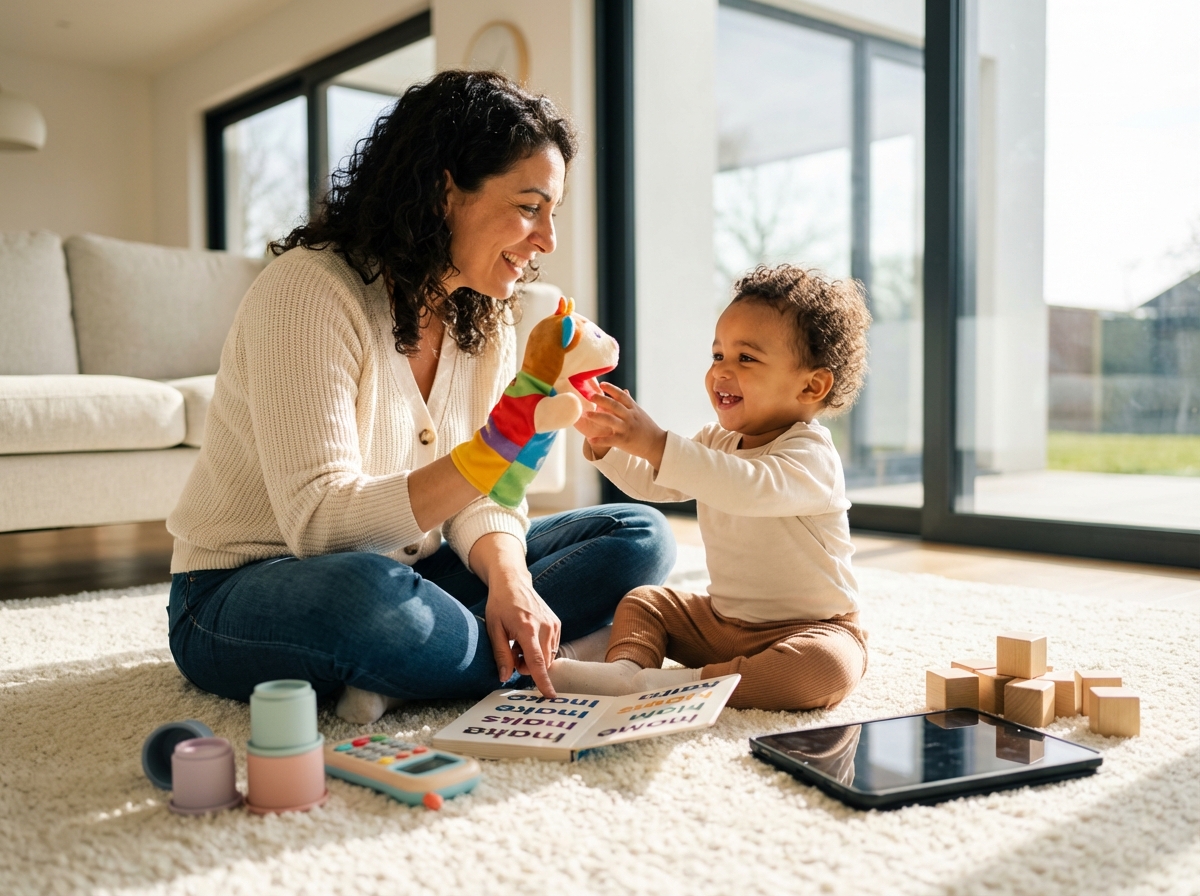
Puppets encourage social interaction. A child might feel less pressure talking to a fuzzy bear than to an adult. This helps with joint attention. The ideal age range is 12 to 36 months. You can model phrases like “Puppet is hungry,” “Give a kiss,” or “Where is the bear?” Look for puppets made from hypoallergenic fabrics. Machine-washable materials are better for sensory safety. In 2025, many puppets include internal textures. These provide tactile feedback while the child moves the mouth of the puppet.
Pretend-Play Sets
Kitchen sets or doctor kits allow for symbolic play. Children learn to use one object to represent another. This is a major milestone for language. The ideal age range is 18 to 36 months. Model phrases such as “Stir the soup,” “Eat the apple,” or “Fix the boo-boo.” Select sets made from BPA-free plastic. Sustainable wood is another good choice. In 2025, these sets often feature realistic textures. This helps children connect the toy to the real world. Avoid sets with very small pieces. They can be hard to clean. They can also be a choking hazard.
Toy Phones and Walkie-Talkies
These toys are perfect for practicing social scripts. They teach the back-and-forth nature of a conversation. The ideal age range is 12 to 36 months, spanning from early babbling to complex role-play. You can say “Hello,” “Bye-bye,” or “Who is on the phone?” Modern versions should have strict decibel limits. This protects sensitive ears. Look for a simple interface. Too many buttons can be distracting. Low-latency audio is important for walkie-talkies. It ensures the child hears the response right away.
Stacking and Sorting Toys
These toys help children name objects. They teach colors and sizes. The ideal age range is 12 to 24 months. Model phrases like “Put it in,” “Big blue block,” or “It fell down.” Prefer toys made from recycled materials. Non-toxic paint is essential. In 2025, many sorters use magnetic alignment. This helps toddlers with developing motor skills succeed more often. Success leads to more engagement. More engagement leads to more talking.
Cause-and-Effect Toys
Toys like ball poppers teach that an action leads to a result. This is the foundation of communication. The ideal age range is 6 to 18 months. You can say “Push the button,” “Pop,” or “Go go go.” Check for sturdy construction. The mechanisms should be easy for small hands to activate. Top 10 Toys for Toddler Speech Development lists several ball poppers that are great for this stage. These toys provide immediate sensory feedback. This keeps the child interested in the activity.
Magnetic Letters and Sound-Matching Games
These are for older toddlers starting to notice sounds. They help with phonemic awareness. The ideal age range is 30 to 36 months. Model phrases like “B says buh,” “Find the letter S,” or “Stick it on.” Look for letters with full magnetic backing. This prevents small magnets from falling out. Large sizes are better for safety. In 2025, some sets include tactile ridges. These help the child feel the shape of the letter while they say the sound.
Open-Ended Building Blocks
Blocks promote turn-taking. They are versatile for many types of play. The ideal age range is 18 to 36 months. Model phrases such as “My turn,” “Your turn,” or “Build it high.” Choose blocks that are lightweight. Foam blocks are a safe option. Hollow plastic blocks work well too. In 2025, many blocks feature magnetic connectors. These allow for more complex structures. This keeps older toddlers challenged.
AAC-Friendly Switch-Operated Toys
These toys are essential for children with motor delays. They allow a child to use a simple switch to activate a toy. The ideal age range is 6 to 36 months. Model phrases like “Turn it on,” “I like the music,” or “More please.” Ensure the toy has a standard 3.5mm jack. This allows for different switch types. The response should be immediate. This reinforces the connection between the switch and the action.
When you look for speech-friendly apps, focus on the design. Look for clear visuals with high contrast. Avoid apps with frequent ads. Pop-ups are also a problem. They distract from the learning goal. The best apps allow parents to customize the vocabulary. You should be able to add pictures of family members. Favorite foods are good to add too. Therapist-reviewed content is a must for any digital tool. Evidence-based AAC apps should have a simple grid layout. This helps the child find words easily. Clear icons are better than complex illustrations. This ensures the child understands what each button represents.
Play routines, activity scripts and vocabulary boosters
Using toys to build language works best when you have a plan. These activities use the items mentioned earlier to create specific learning moments. You can use these scripts as a guide but feel free to adjust them based on what your child enjoys.
Ball Drop Cause and Effect
This activity is for toddlers aged 12 to 18 months. The goal is requesting and learning early functional words. Hold the ball near your face and say, “Look. I have the ball. Ready, set, go. It went down. Where is it? There it is. Your turn. Put it in.” Target words include ball, in, down, go, more, and out. Use a time-delay prompt by holding the ball and waiting for your child to look at you or reach. If they say “ball,” recast it as “big ball.” Track how many times they use a word or gesture to ask for another turn.
Stacking Cups and Spatial Concepts
Target age is 15 to 24 months. The goal is learning prepositions and size words. Use the cups to build a tower. Say, “Up, up, up. The red cup is on top. Oh no. It fell down. Let’s put the small one inside. Big cup, small cup.” Target words include up, on, under, top, fall, big, and small. Offer a forced choice by asking, “Do you want the red cup or the blue cup?” If they say “up,” expand it to “stack it up.” Note if they are starting to use two-word combinations like “cup down.”
Animal Farm Pretend Play
This is great for toddlers aged 18 to 30 months. The goal is animal names and symbolic sounds. Move the animals around the set. Say, “The cow is hungry. Mooo. Eat, cow, eat. Now the pig wants water. Drink, pig. The pig is messy.” Target words include cow, pig, eat, drink, moo, oink, and farm. Use an open prompt by asking, “What does the cow say?” If they say “cow,” recast it as “hungry cow.” Record the variety of different animal sounds they produce during the session.
Bubble Pop Social Interaction
Target age is 12 to 24 months. The goal is targeting final consonants like the p in pop. Blow bubbles and say, “Blow bubbles. Pop. Pop. Pop. Get the bubble. It is on your nose. All gone. More bubbles?” Target words include pop, out, wet, big, more, up, and gone. Use a time-delay prompt by holding the wand ready but waiting for the child to initiate. If they say “pop,” expand it to “pop it.” Track the intelligibility of the final consonant sound.
Toy Phone Social Scripts
This activity suits children aged 24 to 36 months. The goal is social communication and turn-taking. Pretend to call someone. Say, “Ring ring. Hello? Who is calling? It is Grandma. Hi Grandma. I am playing. Bye bye.” Target words include hello, hi, bye, phone, talk, and listen. Use an open prompt by asking, “Who are you calling?” If they say “hi,” expand it to “hi Grandma.” Note the length of the conversation turns your child maintains.
Kitchen Set Action Verbs
Target age is 24 to 36 months. The goal is expanding the use of verbs. Pretend to cook a meal. Say, “I am stirring the soup. Mix, mix, mix. It is hot. Blow on it. Now we cut the apple. Crunch. Yummy apple.” Target words include stir, cut, cook, eat, hot, yummy, and soup. Offer a forced choice like, “Should we cook the pizza or the apple?” If they say “cook,” expand it to “cook pizza.” Record the number of unique verbs used during play.
Building Blocks Turn-Taking
This is for children aged 18 to 36 months. The goal is social reciprocity and labeling. Sit on the floor and say, “My turn. I put a block. Your turn. You put a block. Build it high. It is a tall tower. Boom. It fell.” Target words include mine, yours, turn, block, high, tower, and boom. Use a time-delay prompt by holding the next block and waiting for them to say “my turn.” If they say “tower,” expand it to “big tower.” Track how many turns the child completes before losing interest.
Doctor Kit Body Parts
Target age is 30 to 36 months. The goal is identifying and naming body parts. Use a stuffed animal as the patient. Say, “The bear is sick. Check his heart. Thump thump. Now check his ears. His boo-boo is on his leg. Put a bandage on.” Target words include heart, ear, leg, arm, sick, better, and doctor. Use an open prompt by asking, “Where does the bear hurt?” If they say “ear,” expand it to “sore ear.” Note if they can point to the body parts on themselves or the toy.
Magnetic Letters and Initial Sounds
This is for older toddlers aged 36 months and up. The goal is phonological awareness. Stick letters on the fridge. Say, “This is B. B says b-b-b. B is for ball. Let’s find the M. M says m-m-m. M is for mommy.” Target words include letter, sound, find, match, ball, and mommy. Use a forced choice by asking, “Does apple start with A or B?” If they say “A,” expand it to “A is for apple.” Record which initial sounds they can identify correctly.
Interactive Book Vocabulary
Target age is 12 to 36 months. The goal is increasing noun and adjective vocabulary. Look at a book together. Say, “Turn the page. Look at the dog. The dog is brown. Touch the dog. Soft dog. What is the dog doing?” Target words include page, book, dog, look, touch, and brown. Use a time-delay prompt by pointing to a picture and waiting for them to label it. If they say “dog,” expand it to “brown dog.” Track the number of new nouns they identify in the book.
Puppet Play and Emotions
This activity is for children aged 24 to 36 months. The goal is labeling emotions. Use a hand puppet to tell a story. Say, “The puppet is sad. He lost his hat. Oh no. Now he is happy. He found it. Yay. He is laughing.” Target words include sad, happy, mad, hat, find, and lost. Use an open prompt by asking, “How does the puppet feel?” If they say “happy,” expand it to “puppet is happy.” Note if the child mimics the facial expressions or tone of the puppet.
Rocket Stomper Action Words
Target age is 24 to 36 months. The goal is following directions and action words. Set up the launcher. Say, “Ready, set, stomp. The rocket went fast. It is way up high. Go get it. Bring it back. Let’s do it again.” Target words include stomp, fast, high, back, again, and rocket. Use a time-delay prompt by waiting with your foot over the pump until they give a signal. If they say “stomp,” expand it to “stomp hard.” Record the child’s ability to follow two-step directions like “get the rocket and bring it back.”
For shy toddlers, try parallel play where you play with your own set of toys nearby without demanding eye contact. For distracted children, limit the number of toys visible at once. If you are raising a bilingual child, use the language you are most comfortable with for these scripts. You can alternate languages by using one during playtime and another during routines. Modeling both languages for the same object helps build a robust vocabulary in both.
You can also find more ideas in this list of SLP-approved toys. Beyond dedicated play sessions, everyday routines offer great language boosts. During snack time, use words like “more,” “eat,” and “all gone.” While dressing, name clothing items and use prepositions like “on” and “off.” Bath time is perfect for verbs like “wash,” “splash,” and “pour.” These natural moments reinforce what you practice during play without feeling like a lesson.
Monitoring progress milestones and when to seek help
Watching a toddler grow involves more than just checking off physical growth charts. Communication develops on a specific timeline that helps us understand how a child processes the world. While every child follows their own path, certain benchmarks serve as reliable indicators of healthy progress. Using the play strategies discussed previously is a great start, but you need a way to measure if those efforts are working.
| Age | Communication Benchmarks |
|---|---|
| 9 Months | Intentional gestures like pointing or reaching. Frequent babbling with varied sounds. |
| 12 Months | First meaningful words appear. Ability to follow simple one-step directions. |
| 18 Months | Vocabulary of 10 to 50 words. Early attempts at combining two words. |
| 24 Months | Consistent use of 2 to 3 word phrases. Vocabulary between 50 and 300 words. |
| 36 Months | Use of 3 to 4 word sentences. Speech is mostly understood by unfamiliar people. |
Understanding the Milestones
At 9 months, communication is mostly physical and melodic. You want to see your baby looking at you to share an experience or pointing at a dog in the park. By the first birthday, those babbles turn into specific labels for people or favorite objects. The jump between 18 and 24 months is often the most dramatic. This is when children move from single labels to functional phrases like “more milk” or “mama go.” By age three, your child should be a conversational partner who can tell simple stories about their day. If you are looking for specific items to help reach these goals, you might check this ultimate toy list for speech therapy for ideas that target these specific age groups.
Identifying Red Flags
Early intervention is highly effective because the brain is so adaptable in the first three years. You should consider a professional evaluation if your child is not babbling by 10 months or has no spoken words by 18 months. A lack of social engagement, such as not making eye contact or not responding to their name, is another reason to seek help. One of the most urgent signs is a rapid loss of skills. If a child was speaking or gesturing and suddenly stops, contact a pediatrician immediately. You should also look for progress over time. If you have been using focused play routines for three months without seeing any new words or gestures, an expert opinion can provide a new direction.
How to Track Progress at Home
Keeping a simple weekly log takes the guesswork out of monitoring development. You do not need a complex system. A basic notebook or a digital note works well. Create a table with three columns. Label the first column as the “Word List” to track every word your child says spontaneously. The second column should record the “Number of New Words” added that week. In the third column, write a “Sample Conversational Transcript.” This is just a few lines of exactly what your child said and how you responded during a play session. This data is incredibly helpful for therapists. It shows the Mean Length of Utterance and the variety of speech sounds your child can produce.
The First Evaluation Process
When you meet with a Speech-Language Pathologist, the session usually begins with a detailed case history. The therapist will ask about birth history, ear infections, and when milestones were met. They will then observe your child playing with a variety of toys to see how they communicate naturally. Standardized testing might be used to compare your child’s skills to peers of the same age. The goal is not to “pass” or “fail” but to identify specific strengths and areas where the child needs a boost. You should bring your home tracking logs to this appointment to give the therapist a complete picture of your child’s daily life.
Teletherapy and Remote Consults in 2025
Virtual therapy has become a standard and effective option for many families. Modern platforms allow for high-definition interaction that makes remote sessions feel very personal. To prepare for a teletherapy consult, set up a quiet space with two or three of your child’s favorite toys. It is helpful to record short video clips of your child playing or eating before the session. These clips show the therapist how the child acts when they are not being watched by a stranger on a screen. Make sure your camera is positioned so the therapist can see both your face and the child’s hands during play. This allows the SLP to coach you on techniques like waiting or modeling in real time. Many parents find that top toys for toddler speech development work just as well over video as they do in person when the caregiver is actively involved in the session.
Common questions parents ask
When should I start using toys to encourage speech?
You can begin using toys to support communication from the very first weeks of life. In the earliest stages, toys are primarily for sensory exploration and visual tracking. By the time a baby reaches six months, toys become a bridge for joint attention. This happens when you and your child both focus on the same object. It is a vital precursor to language. If your child is not consistently looking at toys with you or following your point by nine months, it is a good idea to mention this to your pediatrician.
Actionable Tip
Use high contrast toys or mirrors during floor time to encourage your baby to make sounds and facial expressions at their reflection.
Are expensive toys better than simple toys?
Simple toys are almost always better for language development. A set of plain wooden blocks or a cardboard box requires the child to use their imagination and vocalize to create a story. Many expensive electronic toys are designed to entertain the child by talking or singing at them. This often results in the child becoming a passive observer rather than an active communicator. Research into non-tech gift ideas shows that traditional toys lead to more meaningful back-and-forth exchanges between parents and children.
Actionable Tip
Choose open-ended toys like scarves or plastic containers that can represent many different things during play.
How many toys are too many?
A massive pile of toys can actually hinder speech progress. When a toddler is surrounded by too many options, they often struggle to focus on one activity long enough to engage in deep play. Deep play is where the most complex language learning occurs. Having fewer toys visible encourages a child to explore every feature of an object. If you notice your child just throwing toys or moving quickly from one thing to another, you might have too many items out at once.
Actionable Tip
Implement a toy rotation system by keeping only five to eight toys available and storing the rest in a closet to be swapped every few weeks.
Do screens help or harm speech development?
Screens are generally passive and do not provide the responsive feedback a developing brain needs. Language is learned through social interaction and the serve-and-return of conversation. Most apps and videos cannot replicate the way a human responds to a child’s babbles or attempts at words. In 2025, we continue to see that excessive screen time in the toddler years is linked to smaller vocabularies. If you do use a screen, it should be a shared experience where you talk about what is happening.
Actionable Tip
Treat screen time like a picture book by asking questions and pointing to characters to make it an active experience.
My child is bilingual. How should I use toys in two languages?
Bilingualism is a significant cognitive advantage and does not cause speech delays. You should use toys to build vocabulary in both languages simultaneously. You can label a toy car in one language and then use the other language to describe its color or speed. There is no need to stick to a rigid “one person, one language” rule if it feels forced. The goal is to provide a rich language environment in whatever way feels most natural for your family.
Actionable Tip
Narrate your play in the language you speak most fluently to provide the best possible grammatical model for your child.
What if my toddler prefers one toy or one word only?
It is very common for toddlers to go through a phase of intense interest in a single toy or word. This is often how they master new skills. You can use this fixation to your advantage by expanding on what they already know. If they only want to play with a ball, you can introduce words like “roll,” “bounce,” “big,” or “under.” If they only say one word, try to add a second word to it. This helps them move toward short phrases.
Actionable Tip
Follow your child’s lead and join their favorite activity rather than trying to force them to play with something new.
When is AAC appropriate and how to introduce it?
Augmentative and Alternative Communication (AAC) includes everything from simple hand signs to high-tech speech-generating devices. It is appropriate for any child who is struggling to meet their daily communication needs through speech alone. Using AAC does not stop a child from learning to talk; it actually provides a visual map for language and reduces the frustration that leads to tantrums. You can introduce it by modeling a sign or a picture while you say the word during play.
Actionable Tip
Start with three simple signs or pictures for highly motivating items like “milk,” “bubbles,” or “swing.”
How long before I should expect improvement from focused play?
Language development is a gradual process. You might notice your child becoming more engaged or making more eye contact within a few weeks of starting focused play. However, it usually takes about three months of consistent daily interaction to see a significant jump in vocabulary or phrase length. If you have been practicing targeted play strategies for three months without seeing any new communication milestones, it is time to consult an SLP for a formal evaluation.
Actionable Tip
Use a weekly log to write down every new sound or gesture so you can see the small steps of progress that are easy to miss.
What are the best toys for late talkers?
The best toys for late talkers are those that create a reason to communicate. These are often called “communication temptations.” Toys like bubbles or wind-up cars work well because the child needs your help to make the fun happen. This creates a natural opportunity for them to use a sound or a gesture to ask for more. You can find many SLP-approved play ideas that focus on these types of interactive toys.
Actionable Tip
Pause for five seconds before activating a toy to give your child the space to initiate a request.
Should I correct my child’s mistakes during play?
Directly correcting a child can make them feel self-conscious and less likely to try talking. Instead of saying “that is not a tat, it is a cat,” you should use the recasting technique mentioned earlier. Simply repeat the word correctly in a natural sentence. If they say “wa wa,” you can say “Yes, you want water.” This provides the correct model without the pressure of a correction.
Actionable Tip
Aim to repeat the correct version of the word three times during the interaction to reinforce the proper sound.
Takeaways next steps and resources
Moving from theory to practice requires a focused approach. You do not need a room full of gadgets to see progress. Start by selecting two toys that match your child’s current developmental stage. If your toddler is just beginning to use single words, look for cause-and-effect items like ball poppers or simple vehicles. You can find excellent options in the Top 10 Toys for Toddler Speech Development list. Pick one toy for physical interaction and one for pretend play. This variety helps cover different language functions like requesting and labeling. Focus on toys that do not have batteries. Simple wooden blocks or plastic animals require the child to provide the sound effects. This shift puts the burden of communication on the toddler rather than the toy.
Consistency beats intensity every time. Set aside two blocks of five to ten minutes each day. These sessions should be quiet and free from digital distractions. Use the scripts provided in the previous sections to guide your interaction. If you are playing with a farm set, focus on repetitive sounds like “moo” or functional words like “open” and “in.” Your goal is to create a predictable environment where the child feels safe to experiment with sounds. Short bursts of play prevent fatigue for both you and your toddler. You can find structured play ideas and companion guides at My Speech Shop to help keep your sessions varied.
Data helps you see small wins that might otherwise go unnoticed. Track three simple metrics every Sunday evening: the number of new words or signs attempted, how many times your child initiated an interaction, and instances of vocal imitation. If you see no change over three weeks, it might be time to swap the toys or adjust your prompting level. Tracking these points allows you to provide concrete information to your pediatrician or therapist during checkups.
Families using multiple languages should use toys to bridge both vocabularies. Use the same toy to teach the word in English and your home language during separate sessions. This builds a robust mental map of the concept. For children using Augmentative and Alternative Communication (AAC), toys serve as the perfect motivation. Model the word on the device while you play with the physical object. In 2025, many apps offer integrated play modes that sync with smart toys. Look for “high-tech AAC play integration” or “symbol-based play scripts” when searching for new digital tools. You can also find non-tech ideas to supplement this at ASHA.
Play is powerful but it is not a replacement for professional intervention. Consult a Speech-Language Pathologist if your child shows specific red flags. These include a lack of eye contact during play, losing previously held skills, or failing to meet the 50-word milestone by age two. Early intervention remains the most effective way to support long-term communication success. Professionals can provide a tailored plan that goes beyond general toy recommendations. If you are looking for a comprehensive list of items for specific delays, the Ultimate Toy List for Speech Therapy is a reliable resource.
Recommended Resources for 2025
Therapist Directories
Use the ASHA ProFind tool to locate certified SLPs in your area. You can filter by specialty to find experts in early intervention or AAC. Many clinics now offer hybrid models combining in-person play sessions with teletherapy support.
Parenting Language Resources
The Hanen Centre provides evidence-based strategies for parents to use during daily routines. Their “It Takes Two to Talk” program is a gold standard for home-based language stimulation. You can also follow reputable SLP blogs that focus on play-based learning for updated 2025 toy reviews.
Digital Tools and AAC
Search for “AAC modeling apps 2025” or “visual schedule builders” in your app store. Look for tools that allow you to upload photos of your own toys to create custom communication boards. This makes the transition from the screen to the toy box much smoother for the child.
Your dedication to intentional play makes a difference. Language development is a marathon. Every “pop” of a bubble or “vroom” of a car is a building block for future conversations. Stay consistent and trust the process. Collaboration with professionals ensures you are on the right path. Keep the focus on the joy of connection and the words will follow in time.
Sources
- Top 10 Toys for Toddler Speech Development – SLP – MD Searchlight — Toddler Talk Boosters: SLP-Approved Toys and How to Use Them · Ball Poppers: Pop! · Ball Drop Toys: Watch It Go! · Rocket Stompers: Blast Off to Language! · Bubbles …
- Ultimate Toy List for Speech Therapy: Toddlers Language Delays — Today I want to share my Ultimate Therapy Toy Guide with a few new favorites in a post I'm calling The Best Toys for Speech Therapy for Toddlers …
- Thoughtful Gifts for Kids with Speech Delay — Musical Instruments: Simple instruments like shakers, drums, toy keyboards, or harmonicas encourage children to produce sounds, mimic rhythms, …
- Best Toys to Encourage Talking: Speech Pathologist Tips — I have used various Melissa & Doug puzzles, pretend food sets, magnets, dress up clothes, vehicles and stacking toys in therapy sessions for many years.
- My Speech Shop – Speech Therapy Toys and Materials — Speech therapy toys, games, books, materials for speech pathologists and parents! Play based therapy with free SLP companions and parent strategies for …
- Non-Tech Gift Ideas to Boost Kids' Language and Learning – ASHA — Low-tech toys contribute positively to children's development. They help children improve their vocabularies, conversation and turn-taking skills.
Legal Disclaimers & Brand Notices
The information provided in this article is for informational purposes only and does not constitute medical advice, diagnosis, or treatment. Always seek the advice of a qualified healthcare professional, such as a pediatrician or Speech-Language Pathologist, regarding any medical condition or developmental milestones. Never disregard professional medical advice or delay in seeking it because of something you have read in this article.
All product names, logos, and brands are property of their respective owners. All company, product, and service names used in this article are for identification purposes only. Use of these names, logos, and brands does not imply endorsement.