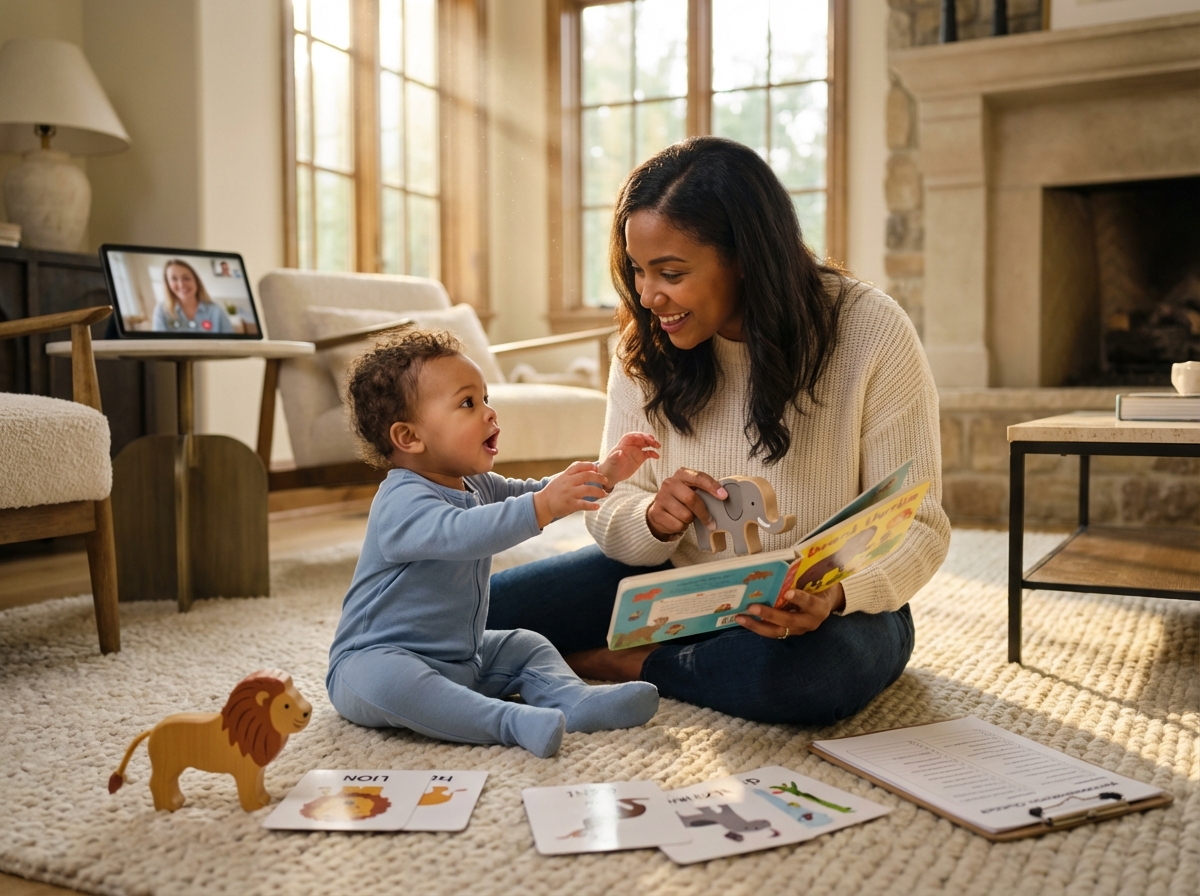
Many parents worry when their toddler talks later than peers. This article explains practical differences between a late talker and a late bloomer, highlights red flags, and gives evidence-informed home strategies, play-based ideas, milestone checks, and clear guidance on when to seek evaluation from speech and language professionals in the United States.
Understanding the Terms and Why They Matter
Understanding the distinction between a late talker and a late bloomer is one of the most frequent concerns for parents navigating early childhood milestones. In clinical terms, a late talker is a toddler between 18 and 30 months who has a limited expressive vocabulary but shows typical development in other areas. These children usually have good thinking skills, play skills, and motor skills. They also understand what is being said to them. Their only significant delay is in the number of words they actually speak. A late bloomer starts out exactly like a late talker but manages to catch up to their peers by age three without intensive professional help. The challenge for parents and experts alike is that these two groups look identical in the beginning.
Clinicians use specific benchmarks to track expressive language growth. Most children say their first meaningful words around 12 months. By 18 months, many toddlers have a vocabulary of about 20 to 50 words. A major shift happens between 18 and 24 months when children begin to combine words into simple phrases. By the time a child reaches their second birthday, the standard benchmark is a vocabulary of at least 50 words and the ability to use two-word combinations. If a child has not reached these markers, they are often identified as having late language emergence. This is a common occurrence in early childhood. Research indicates that roughly 10 to 15 percent of toddlers are late talkers. Some studies suggest this number can be as high as 20 percent depending on the specific group being studied. For example, late talking is much more prevalent in twins, affecting about 38 percent of that population.
Why Early Identification Matters
Waiting to see if a child is just a late bloomer can be a risky strategy. Early identification is vital because language is the primary tool for learning and social interaction. Children who struggle to speak often find it difficult to play with peers or express their needs, which can lead to frustration and behavioral issues. Furthermore, early language skills are the building blocks for future literacy. A child who is behind in vocabulary at age two may face challenges with reading and writing once they enter school. Addressing these gaps early through intervention can change the trajectory of a child’s development. It provides them with the support needed to bridge the gap before academic demands increase. You can find more detailed information on this topic here Are Late Talking Toddlers Just Late Bloomers?
Prognosis and Long Term Outcomes
The path forward looks different for every child. Approximately 50 to 70 percent of children identified as late talkers will catch up by their third birthday. These late bloomers often use more communicative gestures to make up for their lack of words. They might point, lead a parent by the hand, or use mimicry to get their point across. However, the remaining group of late talkers may continue to have language difficulties. Approximately 20 to 30 percent of late talkers are eventually diagnosed with a persistent language disorder. This might include developmental language disorder or conditions like autism. Children who have trouble understanding language in addition to speaking it are at a much higher risk for long-term delays. Studies have shown that even late talkers who seem to catch up by kindergarten may still score lower on complex language tasks in their teenage years compared to their peers.
Risk and Protective Factors
Several factors can influence the likelihood of a child being a late talker. Genetics play a significant role. A family history of language delays, learning disabilities, or dyslexia increases the risk. Gender is another factor, as boys are more likely to be late talkers than girls. Physical factors such as being born prematurely, specifically before 37 weeks, or having a low birth weight can also contribute to delays. Some research has even looked at specific cognitive markers like shape bias. Persistent late talkers often use fewer names for categories organized by shape compared to late bloomers. On the other hand, protective factors can help a child’s progress. A home environment rich in language input is one of the strongest supports. This does not mean constant teaching but rather frequent, high-quality interactions during daily routines. Early intervention services are also a major protective factor that can mitigate the impact of biological risks.
| Factor Type | Examples |
|---|---|
| Biological Risk Factors | Male gender, prematurity, low birth weight, family history of dyslexia |
| Environmental Risk Factors | Low exposure to varied vocabulary, high parental stress |
| Protective Factors | Strong receptive language, frequent use of gestures, early intervention |
The Role of Context
It is essential to interpret milestones within the child’s specific context. In bilingual homes, parents should track the child’s total vocabulary across all languages. If a child knows 20 words in English and 30 words in another language, they have met the 50-word benchmark. Bilingualism does not cause language delays, but it does change how we count progress. Cultural variations also play a role in how families communicate. Some cultures place less emphasis on children speaking early or frequently. However, the underlying developmental milestones for language acquisition remain relatively consistent across different cultures and languages. Clinicians must take these factors into account to avoid misdiagnosis while ensuring that children who truly need help receive it.
How to Observe, Monitor and Screen at Home
Monitoring your child’s development at home is one of the most effective ways to catch potential delays early. You see your toddler in their most natural environment, which provides a much clearer picture than a twenty-minute doctor visit. By keeping a simple log of what your child says and how they interact, you can provide your pediatrician or a speech-language pathologist with the data they need to make an accurate call.
Speech and Language Milestones by Age
Children develop at different rates, but there are specific windows where we expect certain skills to emerge. These milestones include expressive language, which is what they say, and receptive language, which is what they understand. We also look at gestures and joint attention, which is when a child shares an interest in an object with another person.
9 to 12 Months
At this stage, communication is mostly about social connection. You should see your baby using joint attention, such as looking at a dog in the park and then looking back at you to make sure you see it too. They should start using gestures like waving goodbye or pointing to things they want. While they might not have many clear words yet, they should be babbling with a variety of sounds like ba-ba or da-da. Most babies have at least one or two meaningful words by their first birthday.
12 to 18 Months
Vocabulary begins to grow slowly during this period. By 15 months, many children have about 10 words. By 18 months, the count usually reaches 20 to 50 words. They should also be able to follow simple, one-step directions like “get your shoes” without you needing to point. Gestures remain important, and they should be pointing to show you things of interest, not just things they need.
18 to 24 Months
This is often when the “word spurt” happens. By age two, a typical child has a vocabulary of at least 50 words and has started putting two words together. These are simple phrases like “more juice” or “doggy bark.” Their receptive language should be even stronger, allowing them to point to several body parts or pictures in a book when named.
24 to 36 Months
Language becomes much more complex here. By age three, children usually have hundreds of words and speak in short sentences. You will start to hear basic grammar, such as using “in” or “on” and pluralizing words. Their speech should be understood by familiar adults about 75 percent of the time.
Red Flags That Require Prompt Evaluation
While some children are simply late bloomers, certain signs suggest a child might need professional support. If you notice these red flags, it is best to skip the wait and request an evaluation immediately.
- No babbling or back-and-forth gesturing by 12 months
- Fewer than 6 to 10 words by 18 months
- Fewer than 50 words by 24 months
- No two-word spontaneous phrases by 24 months
- Any loss of previously held speech or social skills at any age
- Limited eye contact or lack of interest in social play
- Difficulty following simple instructions by age two
- Unclear speech that is very hard to understand even when the child seems to know what they want to say
Screening Tools for Home Use
If you are unsure whether your child’s progress is on track, you can use standardized screening tools. These are often the same forms used by specialists to determine if a child qualifies for services. You can find these online or ask your pediatrician for a copy.
| Screening Tool | What It Measures | When to Refer |
|---|---|---|
| Ages and Stages Questionnaire (ASQ) | General development including communication, motor, and social skills. | Scores in the “monitor” or “below” cutoff zones. |
| MacArthur-Bates CDI | A detailed checklist of vocabulary and gestures. | Scores below the 10th or 20th percentile for their age. |
| Language Development Survey (LDS) | Focuses specifically on vocabulary and word combinations at age two. | Fewer than 50 words or no phrases by 24 months. |
The Importance of Hearing and Medical Checks
Before assuming a delay is strictly related to language processing, you must rule out physical barriers. Hearing is the most common factor. Even if your child seems to hear loud noises, they might have fluid behind the eardrum (otitis media with effusion) that muffles speech sounds. This makes it hard for them to distinguish between similar sounds, which slows down word learning. You can request a full audiological evaluation through your pediatrician. This is more in-depth than the quick beep test done in the office. A medical screen can also check for other issues like tongue tie or motor planning difficulties that might make physical speech difficult.
Watchful Waiting vs Immediate Referral
The decision to wait or act depends on the child’s overall profile. If a child is 15 to 18 months old and has a small vocabulary but strong social skills, great eye contact, and understands everything you say, a short monitoring window of four to eight weeks is often acceptable. During this time, you can use specific home strategies to see if they “catch up.”
However, if a child has multiple red flags, such as poor comprehension and limited gestures, you should refer them immediately. Research shows that late talking toddlers who also struggle with understanding are less likely to be late bloomers. In the United States, you do not always need a doctor’s referral to contact your state’s Early Intervention program. These programs provide free or low-cost evaluations for children under age three. Acting early is always safer than waiting, as the brain is most adaptable during these toddler years. If your child is a late bloomer, the extra support will only help them reach their goals faster. If they have a true delay, early intervention can prevent future struggles with literacy and social confidence.
Evidence Based Home Strategies to Support Speech and Language
Effective Parent Language Techniques
Supporting a child who is slow to talk starts with changing how you speak at home. These techniques do not require special equipment. They only require a shift in your daily interactions.
Narrating and Parallel Talk
Narrating is when you describe your own actions. You might say you are pouring the milk or opening the door. Parallel talk is when you describe what your child is doing. If they are pushing a car, you say the car is going fast. This provides a constant model of language without putting pressure on the child to respond.
Labeling and Highlighting
Focus on naming objects your child interacts with. Instead of saying “get it,” say “get the ball.” Stress the target word by saying it slightly louder or slower. This helps the child identify the most important part of the sentence.
Expand and Recast
If your child says a single word, add one more word to it. If they say “dog,” you say “big dog.” If they make a grammar mistake, do not correct them. Simply repeat the sentence back correctly. This is called recasting. It provides a positive model of the right way to speak.
The Power of the Pause
Many parents talk too much because they want to help. Children with language delays often need more time to process information. After you ask a question or make a comment, wait for ten seconds. Look at them expectantly. This silence gives them the space to try and form a word.
Use Shorter Sentences
Keep your grammar simple. Use sentences that are only one or two words longer than what your child currently says. If they are not talking yet, stick to two or three-word phrases. This makes the language easier for them to imitate.
Common Routine Phrases
Using the same words during daily activities helps children predict what comes next. Repetition is the key to building a solid vocabulary.
- Shoes on.
- More milk.
- Up we go.
- Wash hands.
- All done.
- Open door.
- Big bubbles.
- My turn.
- Help me.
- Night night.
- Blue shirt.
- Go outside.
Play Ideas to Build Vocabulary
Play is the natural way children learn. You can turn almost any activity into a language lesson.
Bath Time Play
The bathtub is a great place for learning action words. Use words like splash, pour, wash, and wet. Talk about body parts as you wash them. Use toys like cups or boats to demonstrate concepts like full and empty.
Kitchen Pretend
A play kitchen allows you to practice verbs. You can model words like cook, eat, stir, and hot. Use plastic food to group items by color or type. This helps with category building.
Block Play and Toy Animals
Blocks are perfect for learning prepositions. Use words like on, under, and up. With toy animals, you can practice animal sounds. Sounds like moo or baa are often easier for late talkers to say than actual words.
Sensory Bins
Fill a bin with rice, beans, or water. Hide small toys inside. As your child finds them, label the items. Talk about how things feel. Use words like crunchy, soft, or cold.
Dialogic Reading
This is a specific way of reading books. Instead of just reading the text, talk about the pictures. Ask simple questions like “where is the cat?” If they point, you say the word. Use books with repetitive phrases so the child can eventually fill in the blanks.
Age Tailored Language Goals
Every child develops at their own pace. However, having specific targets can help you track progress more effectively.
| Age Range | Primary Language Goals |
|---|---|
| 9 to 12 Months | Focus on joint attention. Look for first words and the use of gestures like pointing. |
| 12 to 18 Months | Work on increasing the vocabulary to 20 or 50 words. Focus on functional words like mama, dada, and juice. |
| 18 to 24 Months | Start encouraging two-word combinations. Examples include “more cookie” or “daddy go.” |
| 24 to 36 Months | Expand grammar. Focus on using pronouns like I or me and adding descriptive words like big or red. |
Vocabulary Boosters and Routines
Consistency helps children feel secure enough to try new words.
Themed Word Sets
Focus on one group of words for a week. You might choose farm animals or clothing. Use these words across different activities.
The “Target 20” List
Create a list of 20 high-value words that are functional for your child’s daily life. These should not be colors or numbers, but words that help them get what they want. Examples include more, help, open, go, up, mine, eat, drink, mama, dada, and names of favorite toys. Use these words exclusively and repeatedly during play.
Gestures and Simple Signs
Using signs for words like more, help, or please can reduce frustration. Research shows that signing does not stop a child from talking. It actually provides a bridge to spoken language. It gives them a way to communicate while they are still learning to use their voice.
Strategies for Bilingual Families
Raising a child with two languages does not cause speech delays. It is important to support both languages at home.
Keep Routines Consistent
You might speak one language during bath time and another during dinner. This helps the child associate specific contexts with each language.
Track Total Vocabulary
When counting words, count them in both languages. If a child says “gato” and “cat,” that counts as two words. A child is considered a late talker based on their total vocabulary across all languages.
Professional Support
If you seek an evaluation, try to find a bilingual Speech-Language Pathologist. They can better determine if a delay exists in both languages. This is crucial for an accurate diagnosis. You can read more about the distinction in this article on Are Late Talking Toddlers Just Late Bloomers?
Managing Behavior and Tantrums
Tantrums often happen because a child cannot express their needs. Improving communication can lead to better behavior.
Offering Choices
Instead of asking an open question, give two options. Ask if they want the apple or the banana. Hold up both items. This reduces the cognitive load and makes it easier for them to respond.
Reducing Pressure
Do not force your child to say a word. If you say “say milk” and they refuse, do not make it a battle. Simply model the word and move on. High pressure can make a child shut down.
Using Visuals
Use pictures or objects to show what is happening next. A picture of a bathtub can signal that play time is over. This helps with transitions and reduces anxiety.
Seeking Professional Help in the USA
If home strategies do not show results after a few months, professional help is the next step.
Teletherapy and Parent Coaching
Teletherapy has become a standard option. It allows a therapist to observe the child in their natural environment. Parent coaching is another effective model. The therapist teaches you the techniques so you can use them all day.
Finding a Provider
In the United States, you can look for a licensed Speech-Language Pathologist through the American Speech-Language-Hearing Association. Use their ProFind tool to find someone in your area. For children under three, you can contact your local Early Intervention office. This is part of the IDEA Part C program. These evaluations are often free or low cost. You can find more details on Late Language Emergence to understand the clinical standards used by professionals.
Preparing for the Evaluation
To prepare, keep a weekly log of new words and record short video samples of your child playing at home. These clips are often more revealing to a clinician than observation in a new office environment where a child may be shy.
Common Questions Parents Ask and Clear Answers
Parents often find themselves in a difficult spot when their toddler is not hitting speech milestones. The uncertainty of whether a child is a late bloomer or a late talker can cause significant stress. Understanding the nuances of language development helps in making informed decisions about early intervention. This section addresses the most common questions with direct answers based on current research and clinical practice in the United States.
How do I know if my child is a late bloomer or a late talker?
The distinction between these two groups
A late talker is a child between 18 and 30 months who has a limited spoken vocabulary but shows typical development in other areas like play and motor skills. Research indicates that about 13 percent of two-year-olds fall into this category. A late bloomer is a specific type of late talker who eventually catches up to their peers by age three without intensive therapy. One key difference is the use of communicative gestures. Late bloomers tend to use more gestures to get their point across compared to children who remain delayed. Another indicator is language comprehension. Children who understand what is being said to them even if they cannot speak yet are more likely to be late bloomers. You can read more about this in the article Are Late Talking Toddlers Just Late Bloomers? which explores these differences in detail.
Immediate action step
Observe your child during play for one week. Note if they use gestures like pointing or showing objects to communicate their needs. If they use many gestures and understand complex directions, they might be a late bloomer. If they struggle with both, the situation is more urgent.
When is the right time to seek a professional evaluation?
Thresholds for concern
You should seek an evaluation from a Speech-Language Pathologist if your child hits certain red flags. These include no babbling by 12 months or having fewer than 6 to 10 words by 18 months. By 24 months, a child should have at least 50 words and start combining them into two-word phrases. If your child has not reached these milestones, an evaluation is necessary. Waiting too long can miss the window for early intervention benefits. Studies show that late language emergence affects 10 to 15 percent of toddlers. Early identification is the best way to support long-term success.
Immediate action step
Contact your pediatrician to request a referral for a speech and language evaluation. Do not wait for the next well-child visit if you have immediate concerns.
What are the odds my child will catch up without therapy?
Factors that influence outcomes
Approximately 50 to 70 percent of late talkers catch up to their peers by late preschool or school age. However, certain factors increase the risk of persistent delay. These include being male, having a family history of language or learning delays, and being born at a low birth weight. Children who show a lack of shape bias, meaning they do not easily learn names for objects based on their shape, are also at higher risk for persistent language disorders. About 20 to 30 percent of late talkers are eventually diagnosed with a speech or language disorder such as autism or developmental language disorder.
Immediate action step
Review your family history for any instances of late talking or dyslexia. This information is vital for an SLP to determine the likelihood of your child catching up on their own.
What does the evaluation process look like in the USA?
Tests and Early Intervention services
An SLP will use standardized tools like the MacArthur-Bates Communicative Development Inventories or the Language Development Survey. These tools help compare your child’s vocabulary to national averages. In the United States, the Individuals with Disabilities Education Act Part C provides services for children from birth to age three. Local Early Intervention offices offer free or low-cost evaluations. If your child qualifies, they receive an Individualized Family Service Plan that outlines specific goals and therapy schedules.
Immediate action step
Search for your state’s Early Intervention program online. You do not need a doctor’s referral to call them for an initial screening.
How does hearing impact speech development?
The necessity of hearing tests
Even a mild or temporary hearing loss from ear infections can significantly delay speech. If a child cannot hear the subtle sounds of language, they cannot mimic them. A standard hearing screening at the pediatrician’s office is often not enough. A full audiological evaluation is required to rule out any issues with how the ear processes sound.
Immediate action step
Schedule an appointment with a pediatric audiologist. Ensure they perform a thorough exam including tympanometry to check for fluid behind the eardrum.
Should I worry about bilingualism causing a delay?
Bilingual language acquisition
Bilingualism does not cause speech delays. Bilingual children may say their first words slightly later, but they should still hit major milestones within the typical timeframe. When counting words, you must include words from both languages. If a child says “agua” and “water,” that counts as two separate words in their total vocabulary count. If a delay exists, it will show up in both languages, not just one.
Immediate action step
Continue speaking your native language at home. Tracking the total number of words across both languages will give you a clearer picture of your child’s progress.
Can home strategies really make a difference?
The power of parent led intervention
Simple changes in how you interact with your child can boost their language skills. Techniques like narration and parallel talk provide a rich language environment. Research suggests that parent coaching is often as effective as direct therapy for toddlers. By focusing on a small set of high-value words during daily routines, you help your child build a functional vocabulary. You can find more details on these patterns in the Late Language Emergence literature review.
Immediate action step
Select 20 words that are most useful for your child’s daily life, such as “more,” “milk,” or “up.” Use these words repeatedly during your normal routines for the next four weeks.
How do I find a reputable provider?
Teletherapy and local options
Finding the right SLP is crucial. You can use the ASHA ProFind directory to search for certified professionals in your area. Teletherapy has become a popular and effective option for many families, especially for parent coaching sessions. When interviewing a provider, ask about their experience with late talkers and their approach to play-based therapy.
Immediate action step
Prepare a list of questions for potential providers. Ask if they involve parents in the sessions and how they track progress over time.
| Feature | Late Bloomer | Late Talker (Persistent) |
|---|---|---|
| Gestures | High use of pointing and showing | Limited use of communicative gestures |
| Comprehension | Usually age appropriate | May have delays in understanding |
| Progress | Rapid catch up by age 3 | Slow progress without intervention |
| Family History | Often no history of disorders | Higher chance of family language issues |
Sources
- Are Late Talking Toddlers Just Late Bloomers? — It has also been determined that approximately 13% of two year olds are late talkers [2]. Higher prevalence rates have been noted in a population of toddler-age …
- Late Language Emergence: A literature review – PMC – NIH — The prevalence of late language emergence (LLE) in toddlers is reported to be 10–15%. Studies of LTs are both theoretically and clinically significant. Early …
- [PDF] LATE TALKERS: DO GOOD PREDICTORS OY OUTCOME EXIST? — As noted by the US Preventive Services Task. Force [2006], "Speech and language delay affects 5% to 8% of preschool children, often persists into the school …
- Late Language Emergence – ASHA — Late bloomers also were less likely to demonstrate concomitant language comprehension delays when compared with children who remain delayed (Thal et al., 1991).
- Late Talker Speech Therapy – Little Language Lab — Around 20-30% of late talkers will go on to be diagnosed with a speech/language-based disorder (e.g., autism, developmental language disorder, speech sound …
- Late bloomer or language disorder? Differences in toddler … – PubMed — Late talkers tend to say fewer names for categories organized by shape and are less likely to show a "shape bias" than TD children.
- Late bloomer or language disorder? Differences in toddler … — Late talkers tend to say fewer names for categories organized by shape and are less likely to show a “shape bias” than TD children.
- Late Talkers: When To Be Concerned And How Speech and … — Late language emergence, more commonly known as late talking, refers to a delay in spoken language onset with no other diagnosed disabilities or developmental …
- Late Blooming or Language Problem? | LD OnLine — One study has found that the number of gestures used by late-talking children with comparably low expressive languageThe aspect of spoken langauge that includes …
Legal Disclaimers & Brand Notices
The content provided in this article is for informational purposes only and does not constitute medical advice, diagnosis, or treatment. Always seek the advice of a physician, speech-language pathologist, or other qualified health provider with any questions you may have regarding a medical condition or developmental milestones. Never disregard professional medical advice or delay in seeking it because of something you have read in this article.
All product names, logos, and brands are property of their respective owners. All company, product, and service names used in this article are for identification purposes only. Use of these names, trademarks, and brands does not imply endorsement. This includes references to standardized screening tools and assessments such as:
- Ages and Stages Questionnaire (ASQ)
- MacArthur-Bates Communicative Development Inventories (CDI)
- Language Development Survey (LDS)